
Tank Storage Agreement
Tank Storage in a Diesel Chain Trade: TSA, TSR, TTO and T2T
Four storage terms decide whether a tank-held EN590 trade closes. What each one is, who issues it, and where each structure fails.
Read article →Market intelligence and industry analysis from Clement Associates.
Four storage terms decide whether a tank-held EN590 trade closes. What each one is, who issues it, and where each structure fails.
Read article →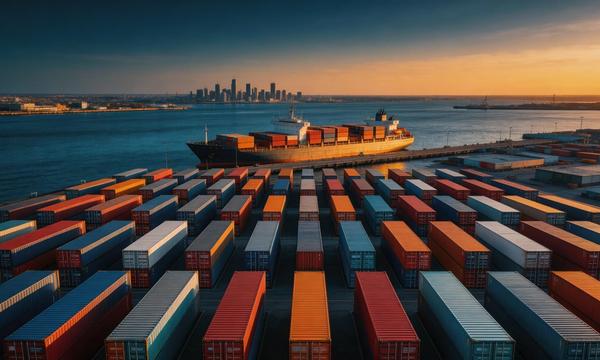
Global commodity markets move billions of dollars every day. Fuel, petrochemicals, metals, agricultural products — the physical trades are executed with precision. The commercial terms are clear. The counterparties are known.

A verification sequence for providers moving value between fiat and digital assets. What to ask, what to check independently, and in what order.

Most tank-held diesel chain trades fail at one of six identifiable steps. What each step requires and what a failure at it costs.

A principal converting $20 million in digital assets through a public exchange does not receive $20 million in fiat. The act of executing an order of that size in a public order book moves the price against the seller before the full position converts. At institutional size, the cost of market impact is a measurable, material number. The solution is not a better exchange. It is a different settlement mechanism entirely.
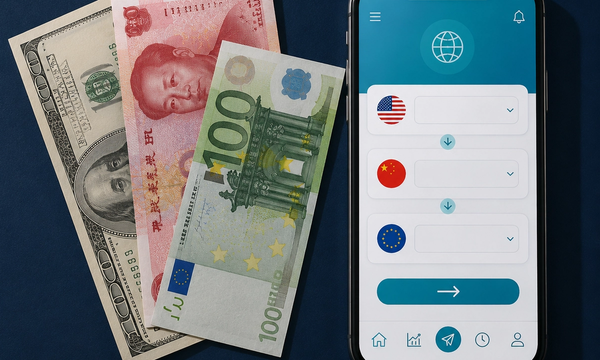
In March 2026, China National Offshore Oil Corporation settled the purchase of 65,000 tonnes of LNG from TotalEnergies in Chinese yuan through Shanghai Petroleum and Natural Gas Exchange. This was the first international LNG transaction settled in yuan. This is a single transaction. Its significance is not the volume. Its significance is the direction it marks: commodity settlement in a broader range of currencies is becoming a commercial reality, not a policy proposal.

Banks are withdrawing from commodity flows. The trend accelerated in 2026 as geopolitical tensions linked to the Iran conflict prompted European correspondent banks to reduce their exposure to trade finance for commodity traders operating in affected corridors. The result is a pattern that has a name in the industry: debanking. Trading businesses that have maintained banking relationships for years are finding those relationships restricted, suspended, or placed under compliance review with limited notice and no clear resolution timeline.

Tokenisation, the creation of a digital representation of a physical or financial asset on a blockchain, has been in development for over a decade. In 2026, it is moving from institutional pilot to commercial deployment across commodity markets. Physical trade principals who understand what is changing will be positioned to benefit from it.

Every international payment moves through a payment rail. Most businesses default to the rail their bank uses. Most businesses are not using the optimal rail for every transaction. The difference in settlement speed, fees, and reliability across rails is significant. For commodity businesses where settlement timing is contractually defined, payment rail selection is an operational decision with commercial consequences.

A named virtual account is a dedicated payment account number, issued in your company's name, held within the infrastructure of a regulated banking partner. It looks like a bank account to the outside world. The funds flow directly to your primary account. The reconciliation is clean. Most commodity businesses operating at institutional scale have never been offered this infrastructure. Most retail banks do not provide it. Access requires introduction to the right partners.

Correspondent banking networks have powered international payments for decades. They also impose costs most treasury teams accept without calculating. For commodity businesses moving significant capital across borders, the gap between accepted and optimal is wide.

When a retail investor converts cryptocurrency to fiat, they use a public exchange. The trade executes against the public order book. Price impact is minimal at small size. Speed is acceptable. Compliance is retail-grade. When an institutional principal converts a significant digital asset position to fiat, none of those defaults work. Public order book execution at institutional size moves the market. Retail compliance frameworks are insufficient. The infrastructure required is entirely different.

Every commodity trade settled across currencies contains an embedded FX decision. The business settling in USD when it earns in EUR either converts at an agreed forward rate, accepts spot risk, or finds a way to hold funds in the currency it needs. Most commodity businesses accept spot risk by default. They convert at settlement, at whatever rate exists on settlement day. Multi-currency accounts change this entirely.